From 1783 to Niagara Falls: The Fascinating History of Balloon Flight
From 1783 to Niagara Falls: The Fascinating History of Balloon Flight
Long before airplanes crossed oceans, helicopters hovered over cities, or astronauts looked back at Earth from space, people dreamed about one seemingly impossible thing: leaving the ground behind. For most of human history, seeing the world from above meant climbing a mountain, standing atop a tower, or simply imagining what the landscape might look like from a bird’s point of view. Then, in 1783, a series of remarkable experiments in France changed that forever. Balloons did something no practical human-made vehicle had done before, they carried living beings, and soon people themselves, into the sky. The Smithsonian describes the Montgolfier brothers’ June 1783 demonstration as the moment that effectively launched the air age, while the Library of Congress traces the rapid succession of experiments that followed throughout that extraordinary year.
More than 240 years later, that fascination with rising above the landscape is still very much alive. The technology is dramatically different, but the emotional pull is surprisingly familiar. At Live! On Air Fallsview Balloon Ride, guests can board a modern tethered helium balloon in Niagara Falls, New York, and rise up to 500 feet for panoramic views of Niagara Falls and the surrounding region. Instead of drifting across the countryside, the balloon remains connected to the ground, creating an experience designed specifically around sightseeing. It is a fascinating bridge between two eras: the pioneering balloon experiments of the 18th century and a modern attraction that lets visitors experience one of the world’s most famous natural wonders from the air.
It All Took Off in 1783
Few years in aviation history were as important as 1783. Within only a matter of months, ballooning moved from experimental demonstrations to animal flights, tethered human ascents, free human flight, and successful hydrogen ballooning. There was no decades-long transition between proving that a balloon could rise and deciding that people should climb aboard. Once the possibility of flight became visible, inventors and spectators alike seemed determined to find out just how far the new technology could go. France became the center of that transformation, and enormous crowds gathered to watch machines rise into a part of the world humans had never truly occupied before.
What makes the story even more remarkable is how different this breakthrough was from the aircraft that would arrive more than a century later. Early balloons had no wings, propellers, jet engines, or sophisticated navigation systems. They relied on buoyancy, making the aircraft lighter than the surrounding air so it would rise. The idea sounds straightforward today, but in 1783 it represented a profound shift in what people believed was physically possible. Once those first balloons appeared above French towns and cities, the sky stopped being simply something people looked at. It became somewhere people might actually go. The Smithsonian and Library of Congress both identify 1783 as the pivotal year when practical human balloon flight emerged and the centuries-old dream of aerial travel began becoming reality.
The Montgolfier Brothers and the Annonay Demonstration
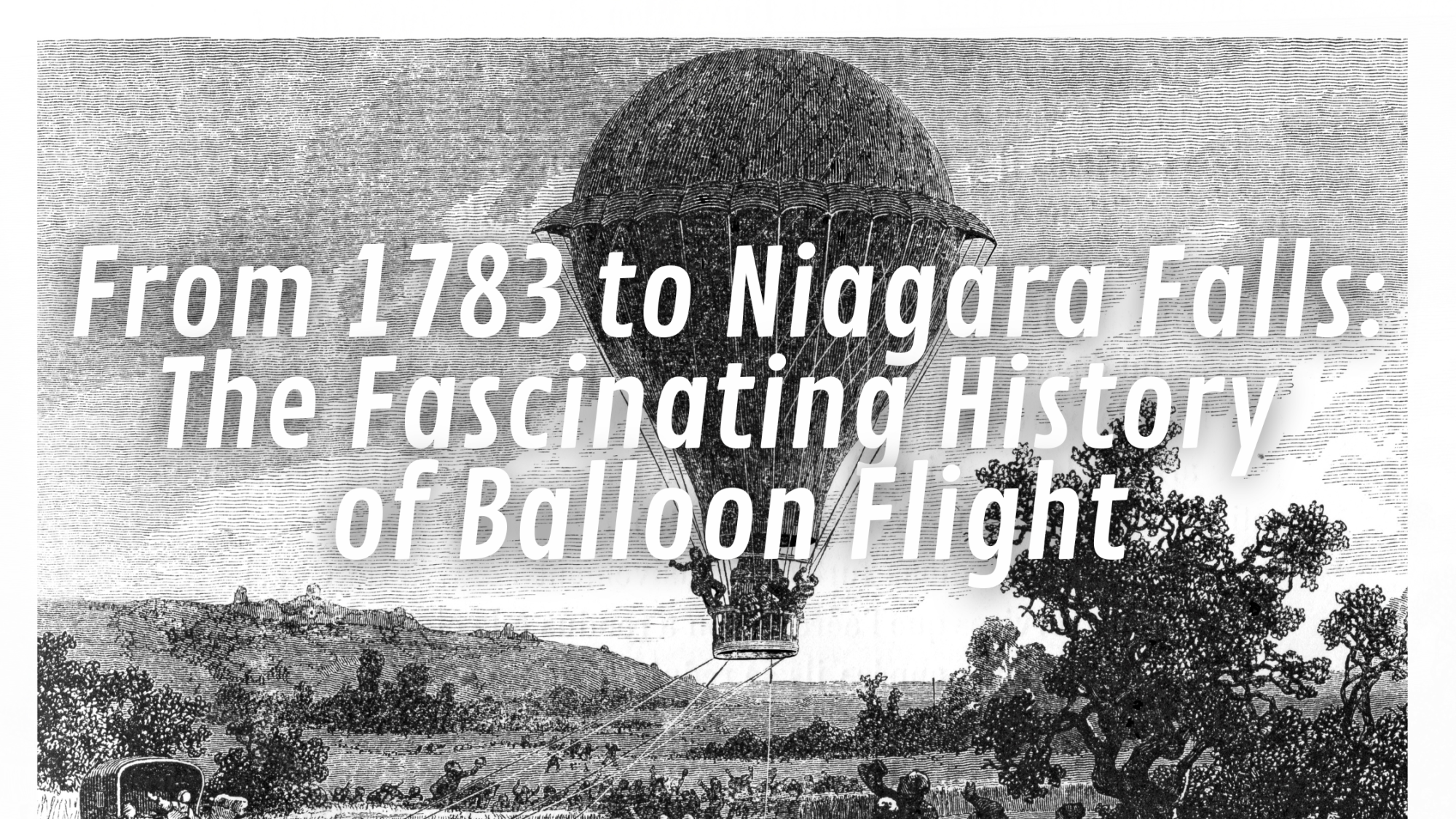
The story begins with brothers Joseph-Michel Montgolfier and Jacques-Étienne Montgolfier, members of a French papermaking family. Through experimentation, they discovered that heated air trapped inside a lightweight envelope could create enough lift to raise the structure into the sky. On June 4, 1783, the brothers staged a public demonstration in the town square of Annonay, France, sending a large hot-air balloon upward before an astonished crowd. The Smithsonian’s National Air and Space Museum describes that flight as the event that launched the air age.
Try to imagine seeing it without the benefit of modern aviation. There were no airplanes passing overhead, no television images of spacecraft, and no childhood memories of looking out an airline window. A large human-made object simply rose into the sky. That visual alone must have been extraordinary. The Montgolfiers had demonstrated something far more meaningful than a scientific curiosity: they had shown that controlled human-made lift was possible on a scale large enough to eventually carry passengers. Suddenly, the question was no longer whether a balloon could rise. The question was what, or who, could safely go along for the ride. Within only a few months, that question would lead the experimenters to Versailles and one of the most unusual passenger lists in aviation history.
The Famous Versailles Animal Flight
On September 19, 1783, another Montgolfier balloon rose from the grounds of Versailles before an audience that included King Louis XVI and Marie Antoinette. This time, the balloon was not empty. Its passengers were a sheep, a duck, and a rooster, placed inside a wicker cage suspended below the balloon. According to the Library of Congress, the balloon climbed to roughly 1,700 feet before landing about two miles away, with its animal passengers surviving the journey. Smithsonian records likewise identify the sheep, duck, and rooster as the first living creatures carried aloft in this landmark balloon experiment.
The flight was far more than an entertaining spectacle. Experimenters were trying to answer a serious question: could living creatures survive a journey into the upper air? At the time, no one could simply look up decades of aviation medicine or atmospheric science. Every ascent entered unfamiliar territory. When the animals returned safely, it cleared one of the biggest psychological and practical hurdles standing between experimentation and human flight. Someone watching that balloon rise might reasonably have wondered how long it would be before a person volunteered. As it turned out, the answer was not long at all. One of the men closely associated with the animal experiment, Jean-François Pilâtre de Rozier, would soon become one of the most important names in early aviation history.
The First Human Balloon Flights Changed Everything
Once animals had traveled safely by balloon, human flight followed with astonishing speed. The transition was not treated casually; early aeronauts first conducted tethered ascents, keeping the balloon physically connected to the ground while testing how the craft behaved with people aboard. Yet by November 1783, the tether would come off. Humanity was about to experience something fundamentally new: people traveling through open air with no physical connection to Earth below them. Smithsonian historical material records the first tethered human flights in October 1783 and the first free human balloon flight on November 21, 1783.
That progression makes the early history of ballooning feel remarkably modern. Engineers today still test new aircraft incrementally, beginning with controlled environments before expanding what a vehicle is allowed to do. The early balloon pioneers were working without modern computers, meteorological models, composite materials, radio communication, or generations of aviation knowledge, but the underlying instinct was similar: test, learn, improve, and then push the boundary a little farther. Their courage was matched by curiosity. Every few weeks in the second half of 1783 seemed to bring another aviation first. By the end of the year, people were not merely asking whether humans could fly. They were beginning to ask what flight might become.
Pilâtre de Rozier’s Tethered Ascent
In October 1783, Jean-François Pilâtre de Rozier participated in the first human ascents using the Montgolfier balloon system. Smithsonian historical accounts identify October 15, 1783, with one of the pivotal tethered human ascents of this period. The balloon remained secured to the ground, giving experimenters a degree of control while allowing a person to experience altitude directly.
There is an interesting connection between that early experiment and the way a modern tethered balloon operates today. A tether does not make the experience less meaningful; it changes the purpose of the flight. For the pioneers, tethering offered a controlled environment in which they could learn about balloon behavior and human flight. Today, tethering can transform a balloon into a sightseeing platform, allowing passengers to rise above one specific location before returning to that same place. At Live! On Air Fallsview Balloon Ride, that means the destination is not somewhere miles away, the destination is up. Guests ascend vertically for an elevated perspective of Niagara Falls and the surrounding landscape, then descend back to the attraction. In a small but fascinating way, one of ballooning’s oldest operational concepts continues to play a role in how people experience lighter-than-air flight today.
The First Free Human Balloon Flight
The decisive moment came on November 21, 1783. Pilâtre de Rozier and François Laurent, Marquis d’Arlandes, boarded a Montgolfier hot-air balloon and completed what is recognized as the first free flight carrying human passengers. The Library of Congress records that the flight lasted about 25 minutes and traveled roughly five and a half miles over Paris. Benjamin Franklin, then serving as an American diplomat in France, was among those who witnessed the emerging age of balloon flight.
Imagine Paris below them. Buildings, roads, fields, people, and the Seine would suddenly appear as parts of a much larger landscape rather than separate features encountered one at a time from street level. That is one reason ballooning captivated people so deeply: it did not simply provide transportation. It provided perspective. For nearly all of history, ordinary people had experienced the world horizontally, moving through it at ground level. Ballooning offered a vertical dimension. Today we take aerial photographs, satellite maps, drone footage, and airline windows for granted, but those first aeronauts were seeing something radically new. Their flight did not have the duration or speed of later aircraft, yet historically it accomplished something far more important. Human beings had left the surface and traveled freely through the atmosphere. The age of human aviation had begun.
Hot Air Wasn’t the Only Way to Fly
While the Montgolfiers were demonstrating the possibilities of heated air, another group of French experimenters was developing a different approach: hydrogen balloons. Physicist Jacques Alexandre César Charles and the Robert brothers worked with hydrogen, a gas considerably less dense than the surrounding atmosphere. On December 1, 1783, Charles and Nicolas-Louis Robert completed the first free human flight aboard a hydrogen-filled balloon. The Library of Congress notes that Charles combined expertise in producing hydrogen with a method for coating silk with rubber, helping create a gas-tight balloon whose overall design, with a gondola, netting, valve, and ballast, would influence gas balloon construction for generations.
This was a major turning point because it established that lighter-than-air flight could be achieved through more than one method. Hot-air balloons create lift by heating air inside the envelope, making that air less dense than the cooler air outside. Gas balloons instead use a gas that is naturally lighter than the surrounding atmosphere. Historically, hydrogen provided tremendous lifting ability, but it also presented a serious drawback: it is highly flammable. Modern passenger attractions can instead use helium, an inert, nonflammable lifting gas. Live! On Air’s current FAQ specifically notes that its Balloon Ride is filled with inert helium. That makes today’s experience technologically distant from those first experimental flights, even though the same fundamental idea remains at work: a giant envelope of lighter material rises because of the difference between its overall density and that of the air around it.
Balloonomania: When Flight Became a Cultural Sensation
Once people saw human beings floating above Paris, ballooning stopped being merely a scientific experiment. It became a cultural phenomenon. Crowds gathered in enormous numbers for launches, and images of balloons appeared in prints, decorative objects, clothing, household goods, and popular conversation. Smithsonian collections documenting the “birth of the balloon” show just how rapidly balloon imagery spread as the public became fascinated by the new ability to enter the sky. The Library of Congress notes that a reported crowd of approximately 400,000 people gathered for Charles and Robert’s hydrogen balloon flight in December 1783, an extraordinary audience for an era centuries before mass electronic media.
Why did balloons capture people so completely? Part of the answer is novelty, but there was something deeper happening. Ballooning turned a dream that had appeared in mythology, art, religion, and speculative invention into something people could physically witness. Flight went from metaphor to reality almost overnight. The balloon became a symbol of possibility, adventure, scientific progress, and even fashion. We still react to aviation milestones in a similar way today, whether we are watching a spacecraft launch, seeing a new aircraft unveiled, or standing beneath a balloon as it begins to rise. Technology changes, but wonder has a surprisingly long shelf life. The crowds watching balloons over 18th-century France and visitors photographing a helium balloon above Niagara Falls are separated by more than two centuries, yet both are responding to the same wonderfully simple sight: something enormous rising gracefully into the sky.
Balloons Become Tools for Observation
Entertainment was only one chapter in the development of balloon flight. Once humans discovered they could rise above the landscape, another advantage became obvious: altitude offered an extraordinary observation platform. From a balloon, roads, rivers, buildings, fortifications, fields, and movements on the ground became easier to understand as parts of a larger picture. That capability soon attracted military interest. According to the National Park Service, military balloon use dates back to the French Revolutionary Wars in the 1790s, and by the American Civil War balloons were being used for reconnaissance and helping direct artillery fire.
The idea sounds obvious to anyone familiar with aerial surveillance today, but in the 19th century it was revolutionary. Before airplanes, satellites, drones, or modern reconnaissance systems, a balloon could lift an observer hundreds of feet above terrain that might otherwise be difficult or impossible to see clearly. The balloon did not need to move very far to become useful. Simply changing the observer’s vertical position dramatically changed the amount of information available. That principle is one of the most enduring themes in the history of ballooning. Whether the objective is military reconnaissance, scientific measurement, photography, sightseeing, or simply understanding the shape of a landscape, altitude changes perception. Sometimes the most meaningful part of flight is not traveling to another destination, it is seeing the place you already know from a completely different angle.
Civil War Ballooning and the Value of a View From Above
During the American Civil War, Union balloon operations under aeronaut Thaddeus Lowe became one of the best-known early applications of balloon reconnaissance in the United States. The National Park Service reports that balloons such as the Intrepid and Union could rise to around 1,000 feet, giving observers views extending for miles. Information gathered from above could then be communicated to forces on the ground by signal flags or telegraph. Lowe gained the confidence of President Abraham Lincoln and was named chief aeronaut of what became known as the Union Army Balloon Corps.
Civil War ballooning also illustrates the importance of tethering. These observation balloons were generally kept connected to the ground because their value depended on maintaining a useful position rather than drifting freely with the wind. An infamous 1862 incident involving General Fitz John Porter demonstrated what could happen when a tether failed: his balloon drifted over Confederate lines before winds fortunately carried it back. The episode sounds dramatic today, but it also highlights a basic difference between free ballooning and tethered balloon operations. A free balloon travels with the moving air mass. A tethered balloon is designed to remain associated with a specific ground location. Modern sightseeing tethered balloons use that same broad concept for a much more peaceful purpose, giving guests an elevated viewpoint while returning them to exactly where their experience began.
Balloons Help Us Understand the Weather, and the Universe
As balloon technology matured, researchers realized that balloons could do more than carry people. They could carry instruments into parts of the atmosphere scientists could not conveniently reach from the ground. This turned ballooning into one of the most important tools in atmospheric science. Instruments suspended beneath balloons could measure conditions at different altitudes, helping researchers understand the vertical structure of the atmosphere rather than relying solely on measurements taken at Earth’s surface. Balloon technology ultimately helped transform weather observation and remains part of modern meteorology today.
The scientific story did not stop with weather. High-altitude balloons eventually became platforms for astronomy, astrophysics, solar research, Earth science, and technology testing. Because they can reach extremely high altitudes without the expense of launching a spacecraft into orbit, scientific balloons occupy an unusual and valuable space between ground-based research and spaceflight. NASA describes its Scientific Balloon Program as a means of providing relatively low-cost, responsive access to near-space for scientific investigation and technology development. In other words, the same basic idea that astonished spectators in 1783, a giant lightweight envelope rising through the atmosphere, continues to enable sophisticated 21st-century research.
Radiosondes Take Weather Science Into the Stratosphere
One of ballooning’s most important scientific developments arrived with the radiosonde. According to the National Weather Service, researchers began suspending basic radio transmitters beneath free balloons in the late 1920s, and by the early 1930s the first radio-meteorographs, later commonly called radiosondes, were being carried into the stratosphere. These compact instrument packages allowed atmospheric measurements to be transmitted back to stations on the ground rather than relying on instruments that had to be physically recovered before their data could be analyzed.
Modern radiosondes can measure atmospheric conditions such as temperature, humidity, pressure, and winds aloft, giving forecasters valuable information about what is happening far above the surface. The National Weather Service explains that wind speed and direction can also be derived by tracking the radiosonde’s position during its flight. Think about how remarkable that evolution is. The earliest balloonists went upward partly because they wanted to understand whether humans could survive in the air. A century and a half later, balloons themselves were routinely carrying instruments upward to tell us what the atmosphere was doing. Every weather balloon rising quietly from a launch site is part of the same long technological family tree that began with enormous crowds staring upward in France.
NASA Keeps Balloon Science Moving Forward
Balloon science is far from being a historical curiosity. NASA’s Scientific Balloon Program continues to support high-altitude missions carrying scientific instruments and technology demonstrations into near-space. NASA says the program typically supports several campaigns and numerous individual flights, with active missions investigating subjects connected to Earth, the Sun, the solar system, astrophysics, and new technologies. Some NASA scientific balloons operate at altitudes well above 80,000 to 90,000 feet, and the agency reports that its highest-achieving balloons have reached roughly 160,000 feet.
That is an astonishing extension of the original balloon concept. The Montgolfier brothers were trying to prove that a balloon could rise. Modern scientists use balloons because researchers already know precisely how to make them rise, and can use that capability to place sophisticated experiments in environments approaching the edge of space. Yet there is a poetic consistency connecting the two eras. Ballooning has always been about changing perspective. In 1783, the perspective was visual: what does Paris look like from above? In modern science, it can be intellectual: what can the upper atmosphere tell us about Earth, the Sun, distant stars, or the origins of the universe? More than two centuries later, balloons continue taking people and instruments to places where being higher allows us to see something we could not see before.
Hot-Air Balloons vs. Helium Balloons: What’s the Difference?
When most people hear the phrase balloon ride, they picture a brightly colored hot-air balloon floating over fields at sunrise. Hot-air balloons create lift by using burners to heat the air inside the balloon envelope. Because the heated air is less dense than the cooler surrounding atmosphere, the balloon rises. A pilot can control altitude by adjusting heat, but a traditional free-flying hot-air balloon largely travels with the winds around it. Its landing location therefore depends on wind direction, speed, altitude, and the pilot’s flight planning.
A helium balloon uses a different source of lift. Helium is naturally less dense than normal air, so a sufficiently large helium-filled envelope produces buoyancy without requiring burners to continuously heat the gas. The Live! On Air Fallsview Balloon FAQ states that its balloon is filled with inert, nonflammable helium. Just as important, the Fallsview Balloon is tethered, so guests are not setting off on an unpredictable trip across Western New York. The experience is built around vertical sightseeing from one location. Those distinctions make the two balloon experiences very different. A traditional hot-air balloon flight is about traveling with the atmosphere; a tethered helium balloon attraction is about rising high enough to transform the view below.
Why a Tethered Helium Balloon Works So Well for Sightseeing
For sightseeing, a tethered balloon has one enormous advantage: it can keep the experience centered over the attraction guests came to see. If a traditional free balloon took off near Niagara Falls, wind direction could quickly carry it away from the very view passengers wanted. A tethered system creates an entirely different experience. Rather than using balloon flight primarily as transportation, it turns altitude itself into the attraction. Guests rise, look outward in every direction, photograph the landscape, and return to the same ground location.
That is exactly what makes Live! On Air Fallsview Balloon Ride an interesting modern chapter in ballooning history. The attraction hosts a 15-minute experience, ascent to heights of up to 500 feet, and 360-degree views of Niagara Falls and the surrounding landscape. Under clear conditions, visibility can extend for more than 20 miles, with views reaching toward the Buffalo area, Lake Ontario, and Toronto in the distance. The gondola can accommodate up to 30 passengers based on rider weights, making the balloon less like the small baskets associated with traditional recreational ballooning and more like an elevated observation platform. Instead of wondering where the winds might eventually take you, the focus becomes something simpler: What can you see when Niagara Falls is suddenly hundreds of feet below your eye level?
A New Chapter of Ballooning in Niagara Falls
Today, the centuries-long story of balloon flight has a distinctly Niagara Falls chapter. Located at 454 Main Street in Niagara Falls, New York, Live! On Air Fallsview Balloon Ride gives visitors the opportunity to experience lighter-than-air flight within the Niagara Falls tourist district. The attraction describes itself as North America’s largest tethered helium balloon and lists ascents of up to 500 feet, weather and operating conditions permitting. From the elevated gondola, guests can take in panoramic views of Niagara Falls, the Niagara River, the surrounding city, and distant regional landmarks on clear days.
Niagara is particularly well suited to an experience built around perspective. At ground level, visitors often move between individual viewpoints, an overlook here, a park path there, a glimpse of the river from somewhere else. Rising above the city changes the geometry of the visit. Features that can feel separate from the ground suddenly connect into one landscape. The river’s path becomes easier to understand, the relationship between the American and Canadian sides becomes visually clearer, and the scale of the surrounding region opens up around you. That is the same gift balloons have offered for centuries. They remind us that sometimes you do not need to travel miles away to discover something new. Sometimes you only need to rise high enough to see where you already are differently.
Daytime, Golden Hour, and Fireworks Flights
One of the most interesting things about seeing Niagara Falls from above is that the experience changes with the time of day. During a daytime flight, natural light helps reveal the Niagara River, the surrounding landscape, the city, and the Falls themselves. Closer to sunset, golden hour can bring warmer light and longer shadows, creating a dramatically different atmosphere for photographs and videos. After dark, Niagara Falls becomes another experience again as illumination, city lights, and scheduled fireworks transform the view. The Fallsview Balloon specifically offers flights during Niagara Falls fireworks displays when operating conditions allow.
For visitors traveling in 2026, the official Niagara Falls USA fireworks schedule lists nightly 10:00 p.m. displays from May 15 through October 12, 2026, with weather conditions affecting the displays. Live! On Air also markets dedicated fireworks flights, creating an opportunity to watch the display from an elevated perspective rather than solely from the ground. Because balloon operations are also weather dependent, particularly when thunderstorms or high winds are present, guests should always verify current operating conditions and availability before planning around a specific flight.
There is something wonderfully fitting about fireworks and ballooning sharing the same sky. Both are experiences people instinctively look upward to see. Put them together over Niagara Falls, and centuries of human fascination with height, light, spectacle, and perspective seem to meet in one place.
More Than 240 Years of Looking Up
The technology of balloon flight has changed almost beyond recognition since 1783. Early aeronauts flew fabric-and-paper craft heated by fire or filled with hydrogen, without modern weather forecasting, radios, GPS, advanced synthetic materials, or the accumulated aviation knowledge we possess today. Ballooning has since been used for recreation, military observation, atmospheric research, astronomy, technology testing, and tourism. Radiosondes routinely gather information from high above Earth, while NASA balloons carry sophisticated experiments toward the edge of space. Meanwhile, passenger balloon experiences continue giving ordinary people something the first spectators in France immediately understood: an opportunity to see the world differently.
That may be the most fascinating thing about the history of balloon flight. The technology has evolved, but the emotional experience has remained recognizable. People still watch a giant balloon inflate and feel curious. They still look upward as it rises. Passengers still feel that unmistakable moment when familiar ground begins falling away beneath them. And once they reach altitude, they still discover that landscapes they thought they understood can look completely different from above. From the fields and palaces of 18th-century France to a modern helium balloon rising over downtown Niagara Falls, ballooning continues to offer the same invitation it offered more than two centuries ago: come up and see what the world looks like from here.
Conclusion: Take Your Place in Ballooning History
On June 4, 1783, spectators in Annonay watched the Montgolfier brothers prove that a large hot-air balloon could rise. By September, a sheep, duck, and rooster had flown over Versailles. By October, humans were making tethered ascents. By November, Pilâtre de Rozier and the Marquis d’Arlandes were freely flying above Paris, and by December another branch of ballooning had emerged through Charles and Robert’s hydrogen balloon. In the space of half a year, one of humanity’s oldest dreams had crossed the boundary from imagination into reality.
More than 240 years later, balloons are still taking us upward. Some carry weather instruments. Some carry scientific experiments toward near-space. Some drift peacefully across open countryside. And in Niagara Falls, New York, one rises above one of the most recognizable natural landscapes in the world.
At Live! On Air Fallsview Balloon Ride, the experience combines that centuries-old fascination with flight with modern helium technology and a tethered sightseeing platform built around the Niagara Falls view. Guests can rise up to 500 feet, take in 360-degree scenery, and experience approximately 15 minutes of seeing Niagara from a perspective that simply cannot be duplicated at street level. Daytime, golden hour, or beneath the lights and fireworks, the view changes, but the feeling behind it is timeless.
Ready to look at Niagara Falls from an entirely different point of view? Reserve your Live! On Air Fallsview Balloon Ride and discover why the magic of balloon flight has captivated people since 1783.
More than two centuries of ballooning history brought us here. Now it’s your turn to go up.
Frequently Asked Questions
1. When was the first balloon flight?
The Montgolfier brothers staged their landmark public hot-air balloon demonstration on June 4, 1783, in Annonay, France. That flight did not carry human passengers, but it proved that their large balloon could successfully rise into the air. Later that year, balloon development progressed incredibly quickly. Animals flew at Versailles in September, tethered human ascents followed in October, and the first free human balloon flight took place on November 21, 1783.
2. Who were the first people to fly in a balloon?
Jean-François Pilâtre de Rozier and François Laurent, Marquis d’Arlandes, made the first free human balloon flight on November 21, 1783. Their Montgolfier hot-air balloon remained airborne for approximately 25 minutes and traveled several miles across Paris. The achievement is widely regarded as the beginning of human aviation because the passengers were no longer connected to the ground and traveled freely through the atmosphere.
3. Is the Fallsview Balloon a hot-air balloon?
No. Live! On Air Fallsview Balloon Ride uses helium rather than heated air. The attraction’s official FAQ describes the lifting gas as inert, nonflammable helium. It is also a tethered balloon, meaning the experience is designed to rise above its Niagara Falls location and return to the same spot rather than drift across the region like a traditional free-flying balloon.
4. How high does the Niagara Falls balloon ride go?
Live! On Air Fallsview Balloon Ride advertises ascents of up to 500 feet, depending on operating and weather conditions. The ride lasts approximately 15 minutes, including ascent and descent, and offers 360-degree views of Niagara Falls and the surrounding area. On especially clear days, the attraction says visibility can extend more than 20 miles into the surrounding region.
5. Can you watch Niagara Falls fireworks from the balloon?
Yes. Live! On Air offers Fallsview Balloon flights during scheduled Niagara Falls fireworks displays, subject to balloon operations and weather conditions. For the 2026 season, Niagara Falls USA lists nightly fireworks at 10:00 p.m. from May 15 through October 12, although fireworks themselves remain weather dependent. Because fireworks flights are a special experience and operating conditions can change, checking current availability and reserving ahead is recommended.